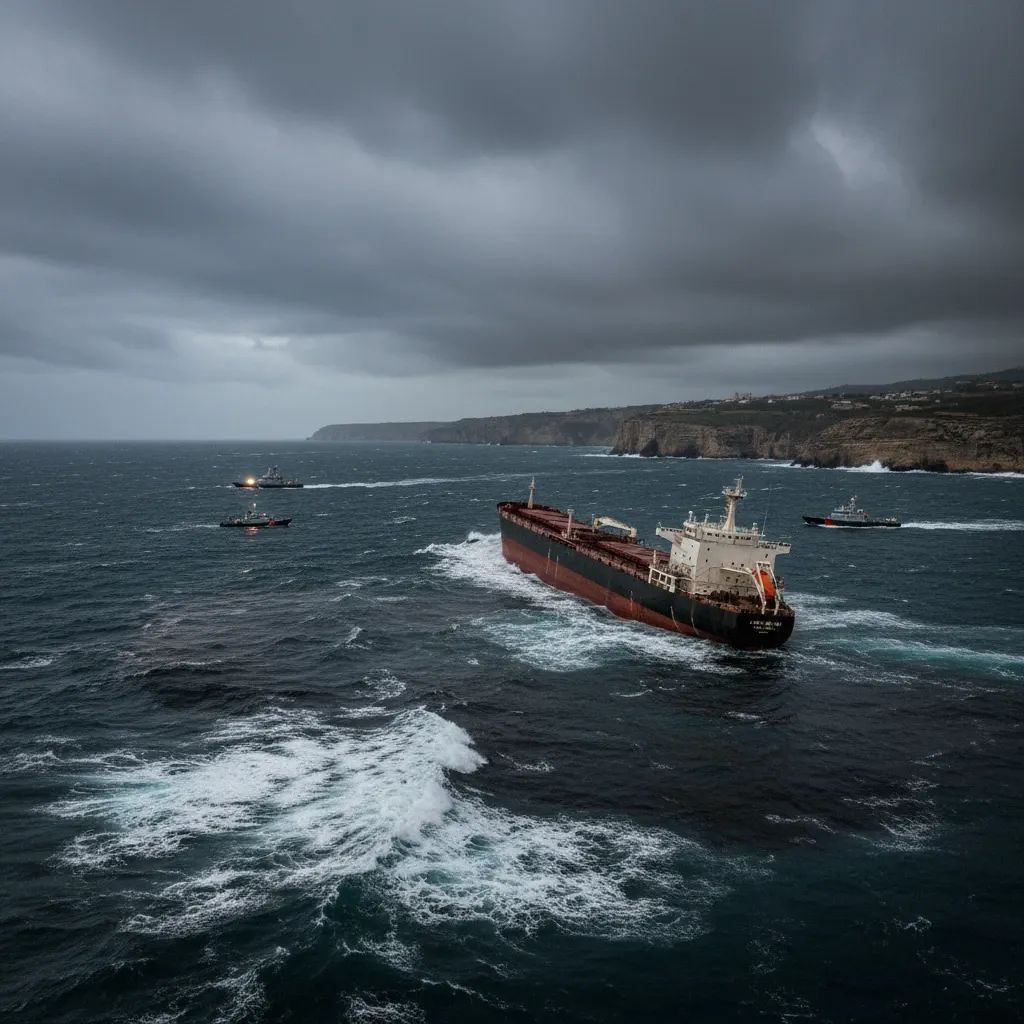
The unmanned Arctic Metagaz, an aging Russian tanker laden with volatile cargo, has finally been secured by Libyan authorities after drifting across the central Mediterranean for three weeks—a maritime incident that at its most precarious moment threatened to contaminate waters between Malta and Italy, disrupt critical oil infrastructure, and potentially create an environmental crisis with significant cleanup and economic costs.
Key Takeaways
• Containment achieved: Libyan tugboats have pulled the vessel away from the coast and offshore oil platforms after the Libyan National Oil Corporation (NOC) took operational control.
• Close monitoring by Malta: The tanker drifted near Maltese territorial waters for several days; the Armed Forces of Malta and Transport Malta monitored developments closely with contingency protocols in place.
• Cargo at risk: The ship carries up to 60,000 tonnes of liquefied petroleum gas plus hundreds of tonnes of fuel oil—capable of causing significant ecological damage to Mediterranean fisheries and marine ecosystems.
How the Crisis Unfolded
In early March, the Arctic Metagaz caught fire under circumstances Russia attributes to Ukraine, though Kyiv has made no public statement on the matter. The vessel's crew of 30 abandoned ship in a lifeboat, with two sailors suffering burn injuries severe enough to require hospitalization once they reached Libyan shores. That same lifeboat subsequently drifted into Maltese search and rescue waters, where the Malta Resource Department intercepted it.
What followed was a three-week drift across the Mediterranean's most sensitive waters. The damaged, uncrewed tanker moved eastward, carrying cargo that, if spilled, would have caused significant ecological damage. The prevailing currents and wind patterns that ultimately moved the vessel away from vulnerable areas proved fortunate for the region.
Why the Libyan Coast Became Critical
Libya's National Oil Corporation recognized immediately what was at stake. The nation's offshore operations depend on a string of producing platforms scattered across its territorial waters, chief among them the Bouri oil field—the largest offshore oil repository in the entire Mediterranean basin. Another facility, the Al-Jurf platform near Tripoli, also lay in the tanker's potential collision path. A strike at either location could have triggered a cascading environmental and economic crisis: oil slicks spreading across international waters, fishing grounds contaminated, maritime traffic disrupted, and Libya's own energy infrastructure compromised.
The situation became serious enough that NOC announced a formal partnership with Italian energy producer Eni to conduct salvage operations. By Tuesday of last week, Libyan state media broadcast footage showing the tanker finally moving under the power of multiple tugboats—a clear sign that the uncontrolled drifting phase had ended.
The Malta Factor
For residents of Malta, the episode underscored geographical vulnerability. The island sits directly in one of Europe's busiest maritime corridors, where aging vessels—particularly those operating outside conventional shipping frameworks—regularly transit. The Arctic Metagaz drifted approximately 50-70 kilometers north of Malta at its closest point, close enough that both the Maltese government and Italian authorities mobilized contingency response plans.
Malta's maritime response infrastructure includes protocols managed by the Armed Forces of Malta's Maritime Squadron and Transport Malta's Emergency Response Division. These agencies operate contingency plans for environmental hazards in territorial waters, though larger-scale salvage operations involving high-risk cargo typically require coordination with EU maritime resources or private contractors based in Italy or France. While Malta has not faced a direct tanker collision in recent years, the island has responded to numerous maritime incidents, including previous fuel leaks and vessel emergencies.
Had the Arctic Metagaz struck shallow waters off the Maltese coast or entered territorial waters, authorities would have faced a serious logistical emergency requiring immediate assistance from external salvage resources. The cost of such an operation would have exceeded tens of millions of euros, with significant implications for Malta's marine insurance premiums and maritime industry competitiveness. The ecological damage would have devastated tourism and fisheries sectors already operating under regional competition.
The Broader Shadow Fleet Problem
The Arctic Metagaz belongs to what maritime analysts describe as Russia's "shadow fleet"—aging, often inadequately maintained vessels used to circumvent international energy sanctions. According to analysis by maritime security organizations tracking sanctions evasion, these ships typically lack modern navigation systems, transparent ownership structures, or comprehensive insurance coverage. When crises occur, coastal states like Malta and Libya absorb environmental and financial costs while the vessels themselves operate in legal ambiguity.
Ukrainian authorities have remained publicly silent on the alleged attack, neither confirming nor denying involvement. The incident illustrates the intersection of geopolitical conflict and maritime safety—a reminder that regional tensions affect civilian shipping operations. Mediterranean shipping lanes have increasingly become areas of concern, with vessels carrying hazardous cargo navigating contested geopolitical space.
Outstanding Questions
Several uncertainties remain regarding the Arctic Metagaz situation. The Libyan National Oil Corporation has not disclosed its final resolution plans: Will the tanker eventually dock for cargo inspection and offload? Will it be anchored permanently in deep water far from infrastructure? Will liability claims against Russian shipowners or insurance carriers prove feasible, given the vessel's operational status and sanctions-related complications?
NOC has established a specialized committee to manage the situation. The corporation has stated that cargo monitoring shows no active leaks and that environmental conditions remain stable—though these assessments assume the vessel continues to maintain structural integrity under the stresses of towing and open-water exposure.
Regional Coordination Exposed Gaps
The episode revealed the absence of a unified Mediterranean maritime safety framework. Malta, Italy, and Libya each tracked the situation independently, with minimal real-time information sharing or coordinated response protocols. In this case, favorable weather patterns—specifically winds that pushed the vessel southward rather than toward populated coastal areas—prevented the situation from escalating into an active emergency response.
Had weather conditions been different and the tanker drifted toward Maltese or Italian territorial waters, the response would have been significantly more complex, expensive, and complicated by competing national interests and existing gaps in regional legal structures governing salvage operations in international waters.
For residents of Malta, the practical takeaway underscores a geographical reality: the island's environmental and economic security depends partly on factors beyond local control. Aging tankers will continue transiting Mediterranean shipping lanes. Geopolitical conflicts will continue generating maritime hazards. Effective preparedness—including regional coordination frameworks and improved tracking systems for high-risk vessels—remains essential for protecting Malta's marine environment and economic interests.